Why is my Guelph property tax still based on 2016 values?
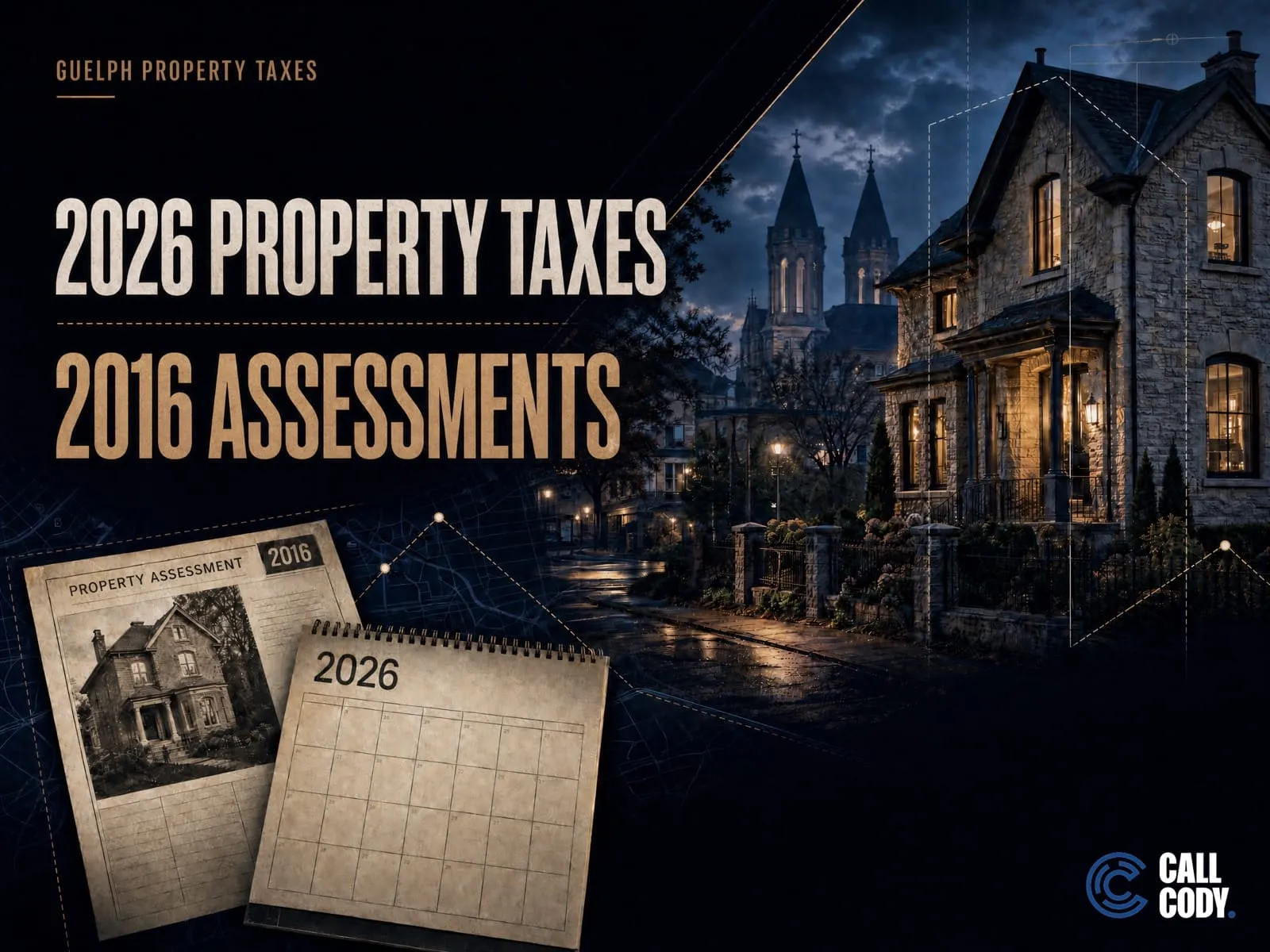
Ontario postponed its 2020 province-wide reassessment because of COVID-19. It still hasn’t set a new valuation date, so MPAC assesses every property in Guelph and Centre Wellington as of January 1, 2016. The City of Guelph’s 2026 budget used a median detached assessment of $410,000 — a 2016 value. When reassessment does happen, your bill won’t rise or fall with your home’s price alone. It depends on how your home’s value changed compared to the average for your property type in your municipality.
By Cody St. Jacques | October 2026
Here’s a number that surprises almost every homeowner I show it to: when the City of Guelph confirmed its 2026 tax increase, it calculated the impact using a typical detached home assessed at $410,000.
That isn’t a mistake, and it isn’t what that home would sell for today. It’s what MPAC says that home was worth on January 1, 2016 — because that’s still the valuation date every property tax bill in Ontario is built on.
We’re now ten years into an assessment cycle that was designed to last four. With municipal elections across Guelph and Wellington County on October 26, and the question of reassessment back in the provincial headlines this fall, it’s worth understanding what that frozen number means for you — whether you’re staying put, selling, or buying.
How we ended up ten years into a four-year cycle
Ontario normally sets a new valuation date every four years, and MPAC reassesses every property to that date. The last full reassessment used January 1, 2016 values, phased in over the 2017–2020 tax years.
Then the pandemic hit:
- The province postponed the 2020 Assessment Update because of COVID-19.
- On August 16, 2023, the government filed a regulation extending that postponement through the end of the 2021–2024 assessment cycle. It wanted more time to review the system.
- MPAC confirms that for the 2026 tax year, the valuation date remains January 1, 2016.
- Ontario’s 2025 Fall Economic Statement (November 6, 2025) gave no date for the next reassessment, per a Miller Thomson analysis.
As of this writing, MPAC’s own pages list no date for the next Assessment Update. In other words, nobody can tell you with certainty when your assessment will catch up with reality.
MPAC hasn’t been idle in the meantime — it still updates assessments when homes are built, renovated, demolished, or change use. But those updates are still expressed in 2016 dollars.
What the frozen number does (and doesn’t) do to your tax bill
The formula itself is simple: your assessed value × the combined municipal and education tax rate = your property tax.
That’s why a 2016 value doesn’t mean you’re getting a bargain. If assessments were twice as high, the tax rate would be set lower to raise the same budget. What drives your total bill year to year is mostly the budget itself. In Guelph, council confirmed a 7.87% increase for 2026 — 3.47% for City services, including the hospital levy, and 4.40% for local boards and shared services. The city pegged that at about $401.62 a year for a median $410,000-assessed detached home. In Centre Wellington, the township approved a 3.7% increase, and Wellington County approved a 3.6% increase on its portion of the bill.
The real effect of a frozen assessment is about who pays what share. Since 2016, different types of homes and different parts of the city haven’t all moved at the same pace. But every property’s tax bill still reflects its 2016 position relative to its neighbours.
Why reassessment won’t simply follow your home’s price
This is the part most homeowners get wrong, so it’s worth reading twice. MPAC is clear that an increase in your assessment doesn’t automatically mean higher taxes. What matters is how your assessed value changed relative to the average change for your property type in your municipality:
- If your home’s value rose less than the average, your taxes would likely go down.
- If your home’s value rose more than the average, your taxes would likely go up.
(MPAC’s examples assume the municipality’s budget doesn’t change — and budgets usually do.)
So when Ontario finally updates values, two Guelph homeowners whose houses both gained a lot since 2016 could see very different results. It depends on whether their home outran or lagged the citywide average. Historically, the province phased assessment increases in over four years, which softened the hit. Whether a future update works the same way is up to the province.
What this means if you’re staying or selling
If you’re staying put: Your bill for now is driven by budgets, not by what your home would sell for. But it’s reasonable to assume a reassessment is coming eventually. When it does, homes that gained more than average since 2016 are the ones most likely to see their share of the tax bill increase. Your assessment notice and the March 31 Request for Reconsideration deadline are worth keeping on your radar every year.
If you’re selling: Buyers see the current tax bill on your listing, and right now it reflects a 2016 assessment. That’s normal for every listing in Ontario, so it isn’t a disadvantage — but expect sharper buyers to ask about it. Guelph also calculates its Vacant Home Tax on the MPAC assessed value, so the same frozen number shows up there too.
What this means if you’re buying
If you’re buying: Treat the seller’s current tax bill as a starting point, not a forecast. It’s a good habit to budget a cushion above it. This matters most on homes in pockets that have appreciated faster than the city overall, so fold that into your full cost picture alongside Guelph closing costs. Your home’s sale price today tells you nothing about its 2016 assessment. That gap can be very different from street to street.
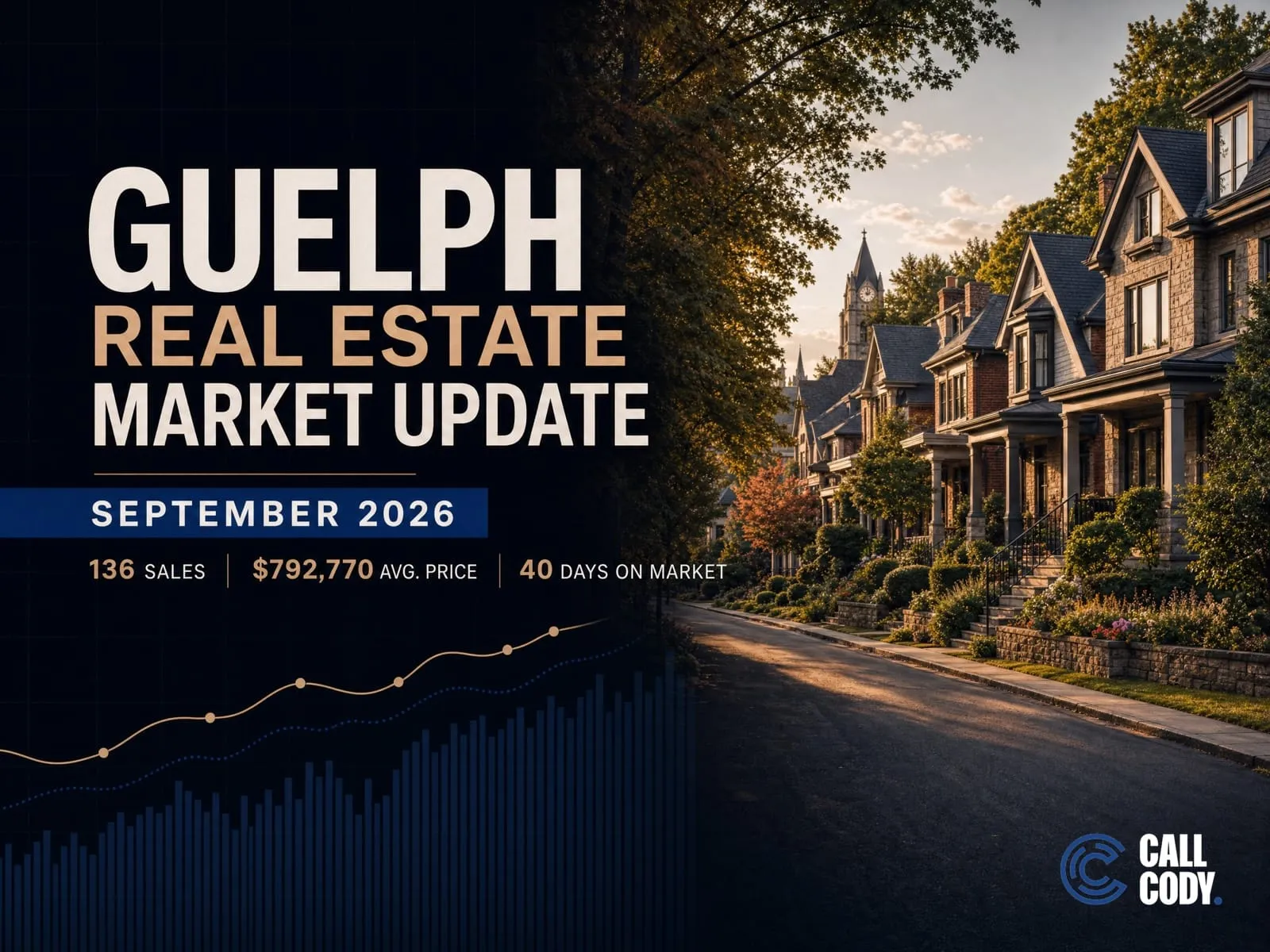
The current gap is real. Detached homes in Guelph are selling for roughly double that $410,000 assessed figure. July 2026 local board data put the detached median at $807,500 — check the latest numbers in my Guelph real estate market update. But what matters for your tax bill is not the size of that gap on its own. It’s how your home’s gap compares to everyone else’s.
This is exactly the kind of thing I like to walk through with clients before they buy or list. Not just what a home is worth, but what it will cost to own.
Frequently Asked Questions
Why is my Ontario property assessment still based on 2016?
The province postponed the 2020 province-wide reassessment because of COVID-19 and later extended that postponement by regulation. MPAC confirms the valuation date for the 2026 tax year is still January 1, 2016, and no date for the next update has been announced.
Will my property taxes go up when Ontario reassesses?
Not necessarily. MPAC says your taxes depend on how your assessed value changed relative to the average for your property type in your municipality. If your home rose less than average, your taxes would likely go down; if it rose more than average, they would likely go up — assuming the municipal budget doesn’t change.
What was the 2026 property tax increase in Guelph?
Guelph’s confirmed 2026 increase is 7.87%, made up of 3.47% for City services (including the hospital levy) and 4.40% for local boards and shared services. The city estimated it at about $401.62 a year for a median detached home assessed at $410,000.
Does a renovation change my assessment even during the freeze?
It can. MPAC continues to review properties when they’re built, renovated, demolished, or change use, but any updated assessment is still expressed as a January 1, 2016 value.
The short version: your tax bill is built on a 2016 snapshot. When Ontario finally updates it, the homes that pulled ahead of the pack are the ones most likely to feel it. If you want to know what your home is worth today, not in 2016, I’m happy to run the numbers with you. That includes what it might mean for your costs down the road. Reach out anytime.
About Cody St. Jacques
Cody St. Jacques is a real estate agent in Guelph, Ontario with over a decade of experience and 1,000+ transactions across resale and preconstruction. Backed by great mentors and a full team of industry experts, he’s built his reputation on honest, no-hype advice that buyers and sellers trust during one of the biggest decisions of their lives.
Whether you’re buying or selling in Guelph and the surrounding area, Cody focuses on one client at a time — guiding you through the market and the process from start to finish.

Looking For Guelph Real Estate Market Clarity? Call Cody
Our team demystifies the market, clarifies real estate processes, and guides you hands-on to your goals.